
How is ReNOKA doing things differently?
ReNOKA takes a different approach.
– Prof. Qalabane Chakela
ReNOKA coordinates all ICM planning and implementation efforts in Lesotho, supports strengthening institutions at national, catchment and local levels, and pilots sustainable financing mechanisms.
Innovation is central to the ReNOKA approach. So what does this look like in practice?

A gender- and youth-inclusive, community-driven approach
Local knowledge and lived experience are central to this approach. Communities – including women and youth – are actively involved in planning, decision-making and implementation, helping to ensure that actions reflect real priorities for all on the ground.
At district level, ReNOKA’s Catchment Planning Units support communities with coordination, technical guidance and alignment across government departments. Practical tools and guidelines help ensure that gender and youth inclusion are embedded throughout the process.

A cross-sectoral and risk-informed approach
Its risk-informed planning focuses on the human drivers of land degradation and water insecurity, such as unsustainable farming and grazing. Through targeted studies, training and support, ReNOKA strengthens the ability of institutions and stakeholders to make informed decisions and build long-term resilience across Lesotho and the wider Basin.

ICM planning at two levels
- At the Catchment Management Area level, Integrated Catchment Management and Development Plans guide stakeholder-led decisions, prioritising interventions and adaptation measures while informing national and Basin-wide planning frameworks.
- At the community level, Community Council ICM Action Plans are developed with local residents through participatory exercises like transect walks and visioning. Catchment Planning Units support communities in identifying challenges, selecting solutions and implementing climate-resilient measures. This bottom-up approach empowers communities to take ownership of protecting and restoring land and water resources.

Sustainable institutions and governance
At the district and national levels, inter-ministerial structures such as the National Technical Secretariat and the ReNOKA-chaired Data Reference Group provide technical support and coordination across sectors. The ICM Coordination Unit (ICU) ensures sustainable, multi-level coordination of planning, implementation and monitoring.
Legal reforms, including updates to the Water Act and Water Resource Management Bill, anchor these institutions and planning processes, giving ReNOKA a strong, long-term foundation. Guidelines and training empower communities to implement and enforce ICM priorities in their areas.

New financing mechanisms to fund ICM institutions and processes
(ii) Outcome Fund – an independent mechanism for implementing ICM measures, with its own governance and rules.
- Grants to Community Councils through the ICM-LoCAL fund for priority ICM measures, supporting fiscal decentralisation and council accountability.
- Direct material support and small grants to communities and community-based organisations for voluntary, small-scale ICM projects.

Data and research for effective ICM
The multi-stakeholder Data Reference Group coordinates land and water data, supporting monitoring, baseline assessments and drone-based data collection.
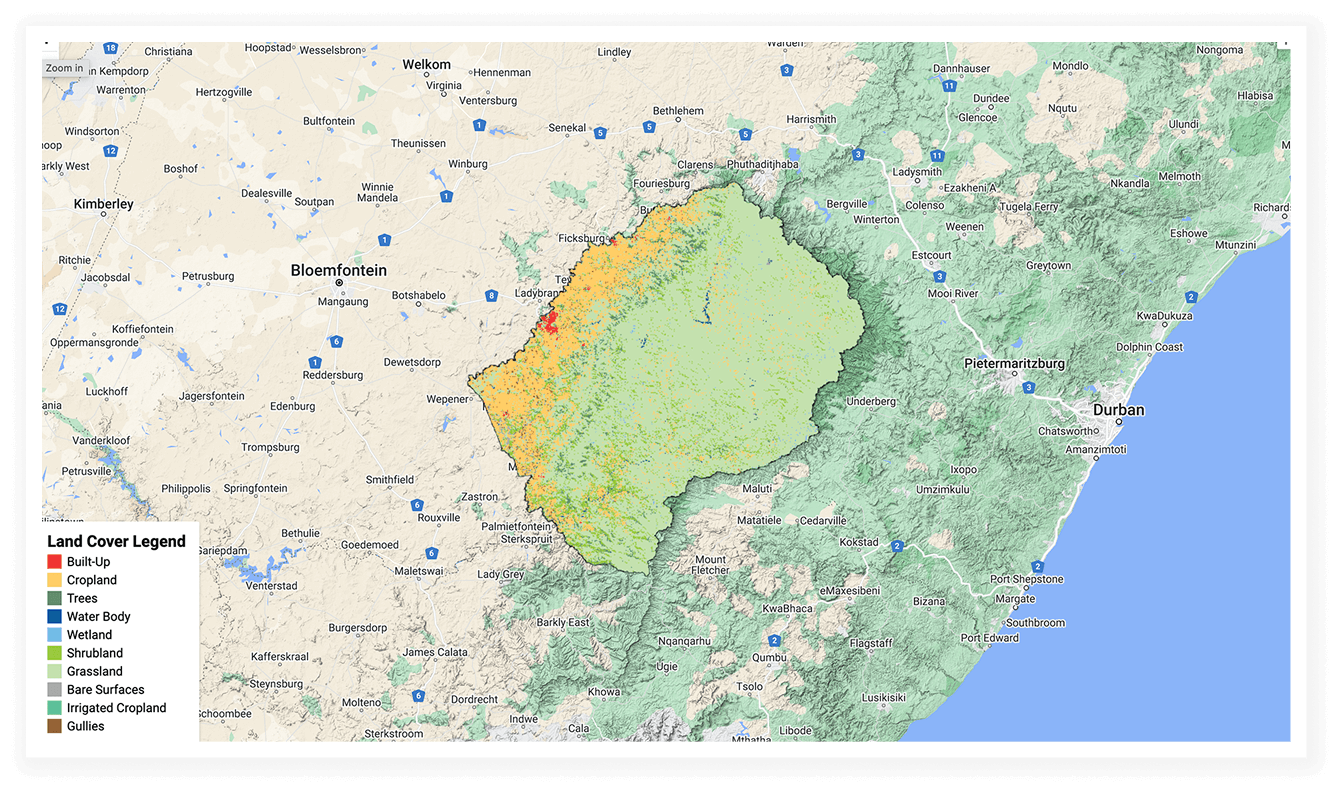
The ReNOKA Land Cover Database tracks land cover changes using satellite imagery and machine learning, providing a baseline to evaluate the impact of ICM measures. This data supports transparency and accountability, informing national planning as well as regional and international reporting.


Sustainable livelihoods strengthen resilience
Saving and Internal Loans Communities (SILCs) help members cover household expenses, invest in farming inputs, or start small businesses. Community-based organisations promote activities such as beekeeping, fruit orchards, and intercropping of corn with fodder crops, which boost income, improve livestock quality, and protect rangelands.
Marketing support, farmer learning centres, and behavioural change initiatives help communities adopt sustainable agricultural and range practices while strengthening long-term resilience.

Building a new generation of ICM leaders
Tailored learning opportunities include non-formal education, university courses, professional training, on-the-job mentoring, and domestic and international exchanges. Partnerships with organisations like the National University of Lesotho, SADC WaterNet, and the Geography and Environment Movement strengthen the next generation of ICM practitioners and leaders.

Regional integration and coherence
Transboundary awareness and learning activities highlight both the challenges and the economic value of shared water management, supporting peer-to-peer learning between countries.